The country
Liberia: small crop, large room
Five and a half million people, two thirds of the country under forest, and a cocoa sector producing well under half of what the same land yields next door. The gap is the opportunity - this page is the evidence for it.
5.6m
People
$4.7bn
GDP · nominal
5.1%
Real GDP growth
36,609
MT cocoa exported · 2025
The economy
A small economy that grows what it earns
Liberia trades in US dollars alongside its own, speaks English in every ministry and boardroom, and sits inside both ECOWAS and the African Continental Free Trade Area. What it exports, it grows or digs.
$4.7bn
Gross domestic product
$840
GDP per head
5.1%
Real growth, latest year
34%
Agriculture's share of GDP
Agriculture in GDP
34%of national output
Farming, forestry and fishing together - the largest single block of the economy.
Workforce in agriculture
45%of those in work
Around seven in ten households draw part of their income from the land.
Cocoa in agricultural exports
11%of agricultural export value
Third behind rubber and palm oil, and the fastest-growing of the three.
Liberia in world cocoa
0.7%of global production
A rounding error on the world market - and the reason the upside is a multiple, not a margin.
The land
Rain, forest and a coast
Cocoa is a shade crop of the wet tropics, and Liberia is one of the wettest countries on earth. The trees that make the rain are still standing - which, under Europe's new deforestation rules, has quietly become an export asset.
- Land area
- 111,369 km²
- Under forest
- 69%
- Annual rainfall
- 2–4.5k mm
- Atlantic coastline
- 579 km
Liberia holds roughly 43% of what remains of the Upper Guinean rainforest - the largest surviving block in West Africa. The land rises from mangrove and beach through rolling farmland to the Nimba range in the north-east, topping out at 1,440 m on Mount Wuteve. Two seasons order the year: rains from May to October, dry from November to April, with the main cocoa harvest running October to March and a lighter crop May to August.
The cocoa belt
Six counties carry the crop, all along the forested northern and eastern arc where rainfall, shade and altitude line up.
- Nimba
- Bong
- Lofa
- Gbarpolu
- Grand Gedeh
- River Gee
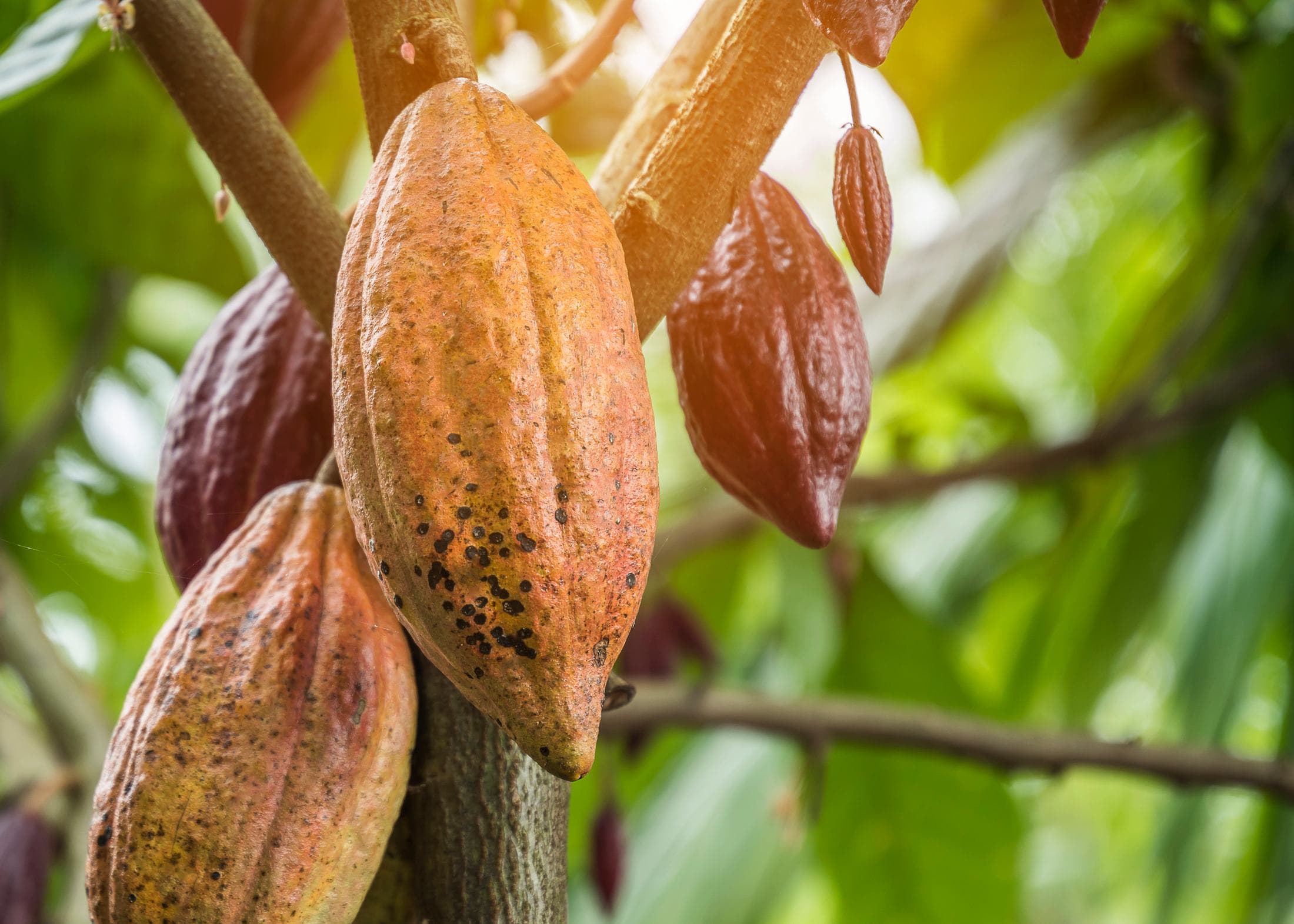
The crop
Cocoa, in numbers
Almost every bean leaves the country raw, grown by smallholders on plots of two or three hectares, at a yield roughly half the regional norm.
36,609
MT exported · 2025
40,000+
Smallholder farmers
300 kg
Average yield per hectare
~0%
Ground or processed at home
The yield gap
Same crop, same climate belt, same variety stock. The difference is planting material, pruning, shade management and the age of the trees - all of which are fixable without clearing a single additional hectare.
Côte d'Ivoire
600 kg/ha
Ghana
450 kg/ha
Cameroon
400 kg/ha
Liberia
300 kg/ha
Indicative national averages · smallholder plots · FAO and national regulators
The case
Why put money into Liberian cocoa
Not because the sector is large. Because it is small, well-placed and under-built, and every one of those is a price.
01
The yield gap is the return
Lifting the national average from 300 kg/ha toward the regional 500-600 doubles farmer income on land already planted. Rehabilitation, grafting and improved planting material are known interventions with known costs.
02
Nothing is processed here
Effectively the whole crop leaves as raw beans. Fermentation, drying, grinding, butter and liquor are all value that currently accrues somewhere else - the first serious processing capacity in-country takes that margin.
03
EUDR turns forest into an asset
Europe now requires proof that cocoa did not come from cleared land. Liberia's smallholder plots sit inside standing forest rather than replacing it - so the story is already true, and only the plot data has to be built.
04
Quality is made post-harvest
Most of the price difference between a Grade I and a mixed lot is decided in the fermentation box and on the drying table. Shared fermentaries are cheap infrastructure against a large, immediate premium.
05
Short road to the water
No landlocked leg. The belt feeds the Freeport of Monrovia and the ports at Buchanan, Greenville and Harper, with Atlantic sailings to European grinders.
06
Plain terms of business
English-speaking, US dollars in daily use, ECOWAS and AfCFTA market access, and a national investment commission that handles registration. Fewer translation layers between a term sheet and a farm gate.
Where these figures come from
- World Bank, World Development Indicators
- IMF Article IV and Regional Economic Outlook
- LACRA - Liberia Agriculture Commodity Regulatory Authority
- LISGIS - Liberia Institute of Statistics and Geo-Information Services
- FAO and ICCO production and trade series
Figures are the most recent available at the time of publication and are rounded for reading. Where national and international series disagree - and for Liberian agriculture they often do - the national regulator's number is used. Check the source before quoting any of this in a term sheet.